


Crypto’s Provably Fair Hashes Do the Job That Cameras Do in a Live Casino in Ontario
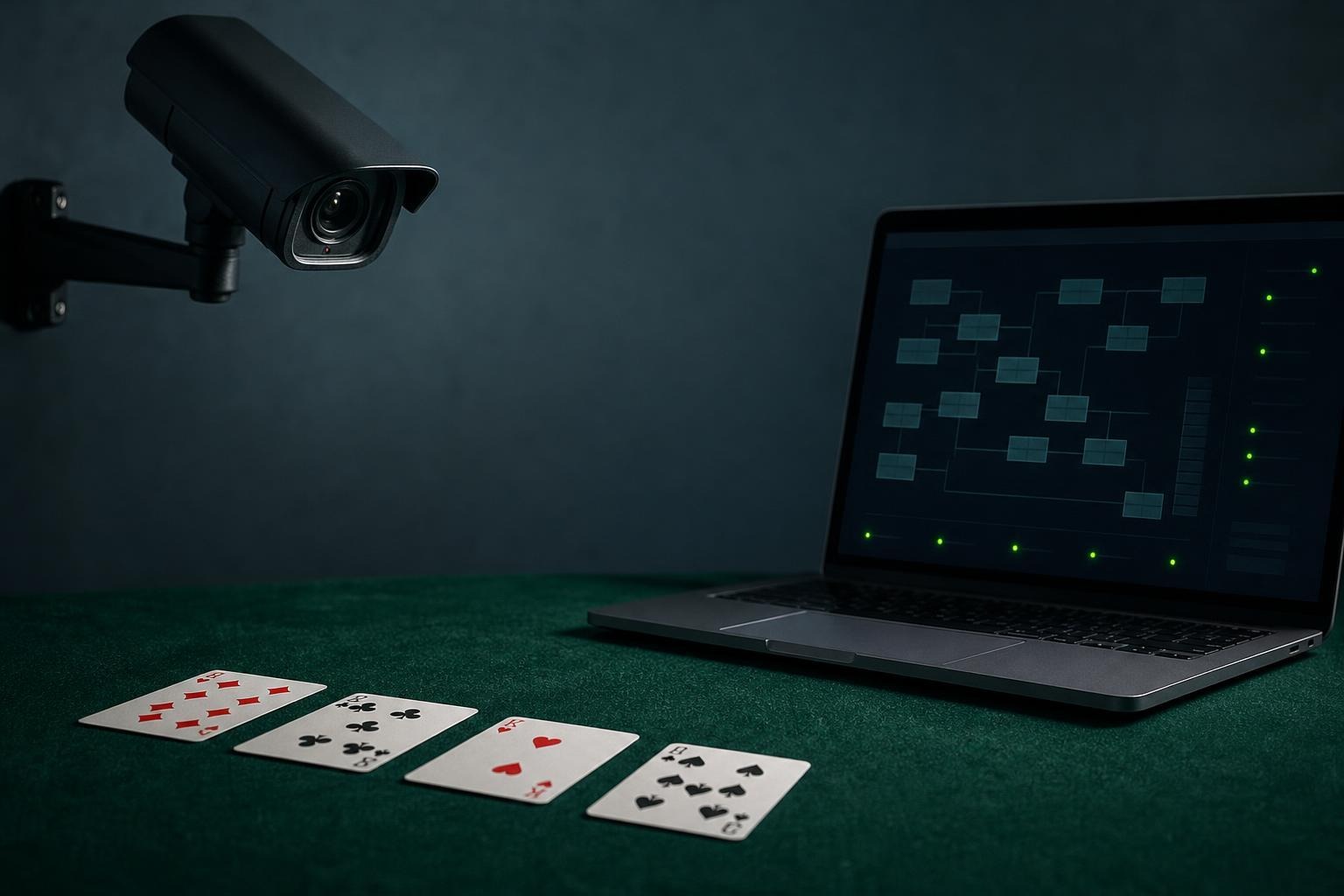
A dealer turns over a card. A camera records it. If the outcome is questioned later, that footage gives a reviewer somewhere to start.
A digital game leaves a different trail. In certain crypto casino games, players can check a result by repeating the calculation that produced it. The system, known as provably fair, uses cryptographic hashes to connect information kept secret during play with information revealed afterward.
The link between these approaches is evidence: what gets recorded, who can examine it and how it helps explain a round.
What the Camera Records
For someone exploring live casino ontario options, the stream shows a dealer handling real cards or running a roulette round. The action happens at a physical table, with players watching remotely.
Surveillance recordings give that action a longer life. Reviewers can examine footage when checking dealing procedures, investigating a complaint or reconstructing an outcome. Details around the action matter: the table’s identity, wagering positions and game options help establish what happened under which rules.
Ontario’s published gaming standards connect monitoring and recording with checks on outcomes, prize payments and financial transactions. They also address table information that must be identifiable through surveillance footage. The record needs enough context to make sense when someone returns to it later.
The Digital Equivalent Starts Before Play
Software-generated games can establish their record before producing a result. The operator creates a secret value called a server seed, then publishes its hash.
Think of the hash as a digital fingerprint. The US National Institute of Standards and Technology explains that hash digests help detect whether information has changed. SHA-256, one commonly used function, produces a 256-bit digest.
Publishing that fingerprint commits the operator to its chosen seed while keeping the seed secret during play. Once revealed, the seed can be checked against the earlier fingerprint.
The player contributes another value, called a client seed. In the protocol examined by MIT researchers, the operator commits first, followed by the player’s independently chosen input. That sequence prevents the operator from selecting its committed seed in response to the player’s choice.
A counter called a nonce separates successive bets that use the same seed pair.
Following the Calculation to the Result
After the server seed is revealed, the check has two parts. Some implementations release the previous seed when the seed pair is replaced, making earlier rounds available for verification.
First comes the fingerprint. Running the revealed seed through the hash function should produce the hash supplied before play.
Then comes the result. The server seed, client seed and nonce go through the published calculation again. The procedure is deterministic: the same inputs produce the same output. Anyone with the required information can compare that output with the recorded game.
There is another step worth following. Generated numbers must be translated into a card, dice result or other game event. The published rules explain how that happens. A card game drawing without replacement, for example, must account for fewer cards remaining after each draw.
Payout rules sit alongside this process. They determine the operator’s mathematical advantage, so a reproducible outcome can still belong to a game with a house edge.
Keeping Evidence After the Round Ends
Both approaches depend on preserving something useful for a later review. A live picture lasts a moment; a saved recording can support an investigation.
That distinction had consequences in Pennsylvania. In December 2024, the state’s gaming regulator announced a US$25,000 penalty after a live-dealer studio failed to save surveillance footage for nearly two days. Cameras at 14 tables stayed operational, but a server failure interrupted recording.
Michigan’s live-dealer framework spells out the importance of retention. Recordings must generally remain available for at least 90 days, with footage connected to an investigation preserved until it ends.
For a seed-based game, the equivalent record includes the original hash, revealed server seed, client seed and nonce. Together with the published procedure, those details allow a result to be reconstructed.
Where Ontario’s Wider Checks Fit
Ontario’s internet gaming standards place records alongside approval or independent laboratory certification, ongoing monitoring and controls over access to live-dealer supplies. They also address recreating game states and protecting games from presenter-related integrity risks.
Cameras preserve the actions at a table. Provably fair systems preserve a route back through a digital calculation. Both give a reviewer something concrete to examine.
Players need personal safeguards too. Ontario’s regulated internet gaming market requires participants to be 19 or older and physically in the province when wagering. Set affordable spending and time limits, avoid chasing losses, and use breaks or self-exclusion tools when needed.
Disclaimer
“This content is for informational purposes only and does not constitute financial advice. Please do your own research before investing.”
Share This Article


